
The Youth Council

What if youth was in charge how would the world look like?
In April 2026, Design Reparations co-designed and delivered The Youth Council, a program for Gynmasium students in Nijmegen in collaboration with Spinsel, a social design studio and the Museum Orientalis. It brought together students aged 14 to 15 around a simple question: “What if youth was in charge? How would the world look like? How would a youth-led governance look like?
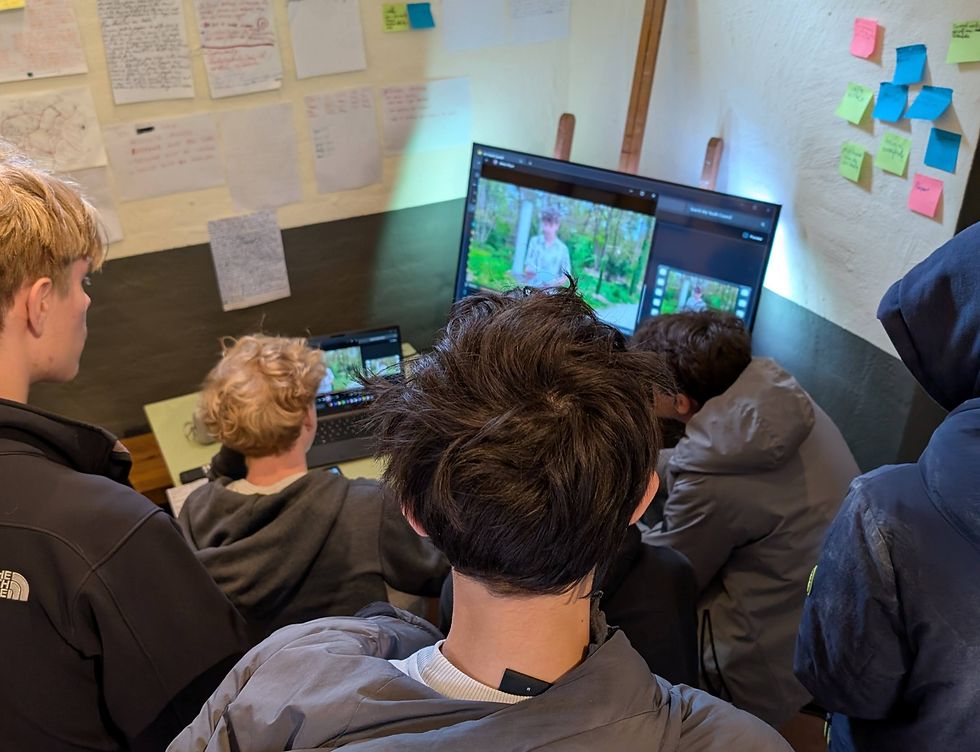
Through inspiration, collective imagination and direct conversations with young people from Kenya and Cameroon, the students learnt and experienced several topics, from decision‑making to education, from agriculture to rights and responsibilities, and shaped their vision of how young people can participate in governance and community life.
The Context
The MDT Week Kansen 2026 (Week of Opportunities) took place from Monday 13 to Friday 17 April at Museumpark Orientalis, Nijmegen, Netherlands. During this week, 152 students from the Stedelijk Gymnasium Nijmegen, participated in a variety of projects and activities on site. The national Social Service Time (MDT) programme supports young students' personal development by engaging them in projects where they can learn while working on socially relevant topics.

Our Guiding Questions
What the future would look like if the youth would have a crucial voice in decision making of our society and way of living? How can the youth exercise more agency and influences?
We often hear young people are the future, yet their voices are frequently dismissed or excluded from important decision‑making spaces. Is this the same everywhere in the world? How do young people elsewhere participate in their communities? How do different cultures create space for youthful perspectives and ideas
The challenge that sparked the creation of the Youth Council
The young participants were given a scenario: a new island in the North Sea, geographically similar to Texel in The Netherlands and the other northern islands. A community of 1,000 people settled there, including students, their families, and their pets.
Their task: design a new way of living together, with a Youth Council playing a central role in establishing and managing the community. They have the authority to design new systems for money, taxation, production, food, and transport.
Three fundamental rules:
Everyone must feel safe and well.
Everyone must be heard.
The land and nature of the island must be cared for.
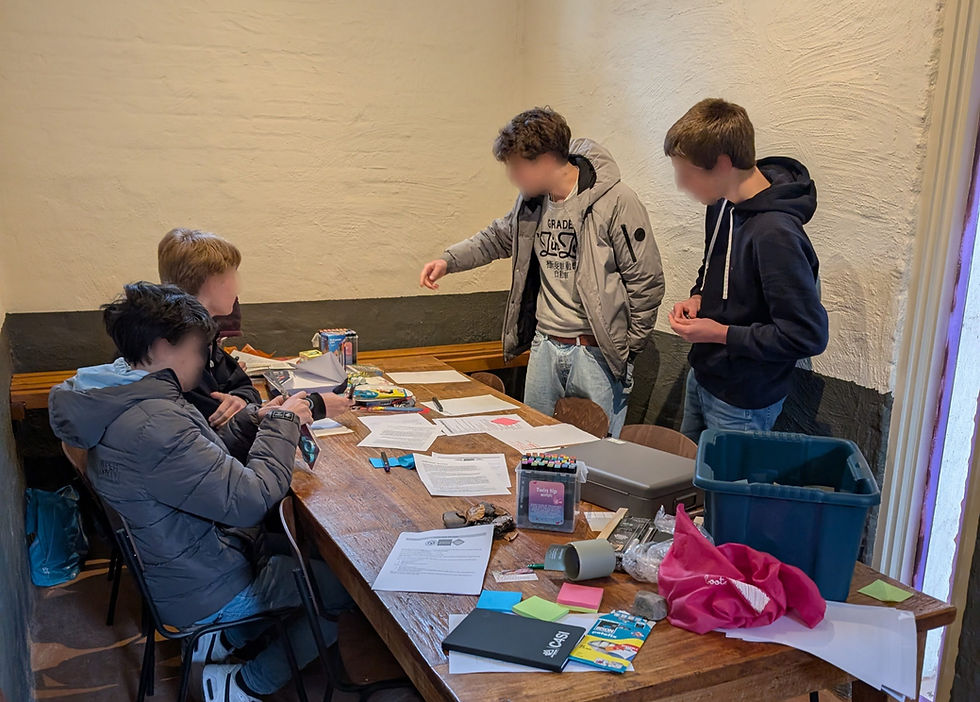
At the end of five days, they presented a proposal to the community: What the Youth Council is, what it does, and how it works.
Day by Day at the Youth Council
Day 1: We decided how we treat others; agreements toward people and the Earth.
Guiding question: What does it mean to make decisions from a youth perspective?
Day 2: Exchange with Indigenous partners about youth projects, challenges, and aspirations.
Guiding question: What is the Youth Council? What does the island look like under youth leadership?
Day 3: Designing roles and systems: taxation, energy, agriculture, housing, education, work.
Guiding question: What does the Youth Council do? How are decisions made?
Day 4: Preparing and launching the Youth Council.
Guiding question: Which medium do you choose to exert influence?
Day 5: Finalizing the presentation: a video showing how young people make decisions, care for others, and lead with nature in mind.
The impact
The Youth Council decided to create a video promotion explaining how the island will look like, why young people are well‑positioned to lead, and how the island should be governed so that people and nature can thrive.
The video was presented to parents, teachers, fellow students, and visitors of the Museum Orientalis. They were asked questions about the ideas behind it, whether it could work, where the concept came from, and how they would ensure equality and democracy were properly implemented.
Some of the guiding pillars were:
Agency, care, and responsibility
Influence and finding your unique voice
Learning from other young people and cultures
Partners from Cameroon (Youths and the Future) and Kenya (Kenge Content Hive) enriched the perspectives with two online calls presenting their youth-led projects, youth aspirations and challenges and how ancestral knowledge and intergenerational relationships can support the youth.
Take-aways:
A video of more than ten minutes proposing a youth‑led governance model for people and nature.
Conversations with students, teachers, and visitors about how the project could evolve further.
A journey of experiencing agency and influence, demonstrating what young people are capable of.
New insights and learning moments through international exchange.

Why It Matters
This project demonstrates that young people's voices and aspirations and challenges are not yet deeply understood. According to Join Us and Dutch NGO focus on mental health of young people “34% of Dutch youth aged 12 to 30 feel somewhat lonely. For most, this feeling is manageable, often motivating them to seek out connection. But what if they can’t find their way out? About 11%—more than 458,999 young people in the Netherlands—fall into a downward spiral. Those with few or no close friends often feel ashamed and hide their loneliness from others”.
The re-connection is already happening. The youth is taking back agency and creating a new culture by leading the climate resilience and community-led solutions. “As the impact of climate change intensifies over time, it is the young people of today and future generations who will face the worst effects. Already, an estimated 1 billion children are at extremely high risk to the impacts of climate change. In addition, with over 1.2 billion people aged 15 to 24 globally, the scale of exposure highlights the urgency of ensuring that youth are not just protected, but actively engaged in shaping climate mitigation and adaption solutions.” by Green Deal Projects Support Office, European Commission publication,
In the Youth Council we collaborated with two indigenous youth-led organizations - (Youths and the Future) and(Kenge Content Hive) who are deeply inspired by ancestral knowledge for sustainable and responsible solutions to local and global challenges.
“Ancestral knowledges are systems of knowledge based on the epistemologies (ways of knowing), and written, oral, and spiritual traditions of Indigenous peoples. Because of colonialism, slavery, genocide and other systems of oppression, Ancestral knowledge of some Indigenous peoples has been threatened and even erased. Ancestral knowledge has also been preserved and passed on.” Muhammad Khalifa
From Indonesia to Kenya to Australia, Indigenous youth are weaving ancestral wisdom with innovative solutions, fighting for justice and equity, and claiming a space where decisions are made. We at Design Reparations believe that the way to re-imagine, repair and transform our dying systems is by centering voices and knowledge of Indigenous and local communities.


Comments